
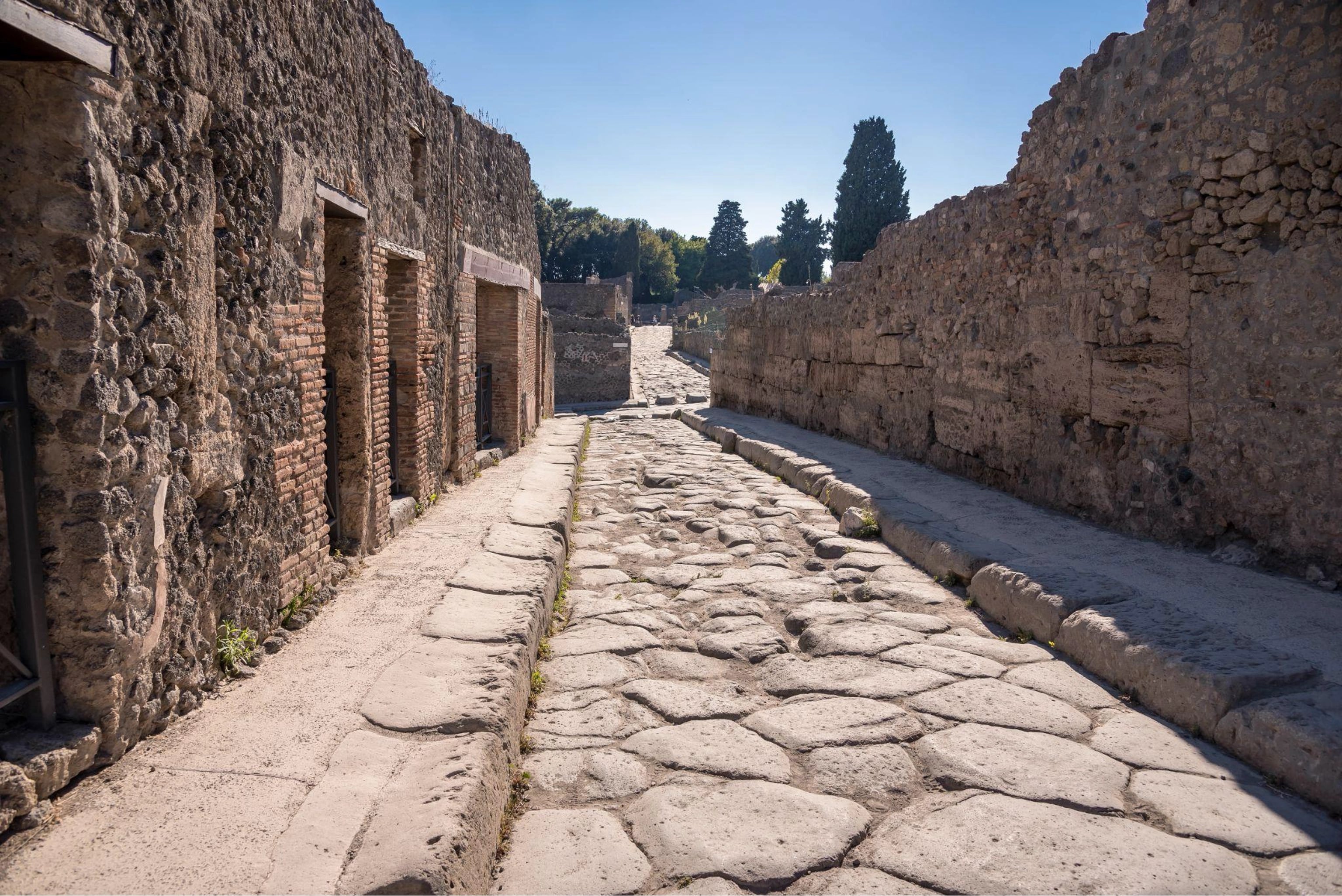
Stand on a Roman road two thousand years ago and you would feel it before you heard it. A low trembling in the ground, then the rolling thunder of iron-shod hooves and the deep creak of oak wheels turning over at groans past her stone. Caped with wool and wine, salt and oil, its wooden wheels grinding over the cobbles in a rumble that is half roar, half heartbeat. That was the sound of an empire on the move.
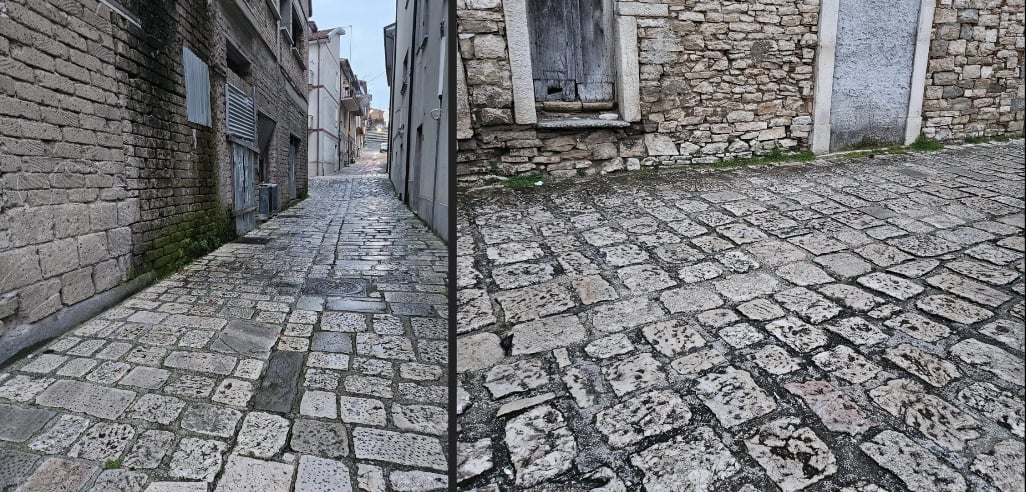
Limestone Cobbles, Rome, Italy. Photo: Neolithic Materials
The Romans did not lay stone roads for beauty. They laid them so the infantry could march. The craft began in 312 BC, when the censor Appius Claudius drove the first great paved road south from Rome toward Capua, and the Via Appia set the pattern for everything after it. Surveyors sighted their lines and refused to bend for hills.
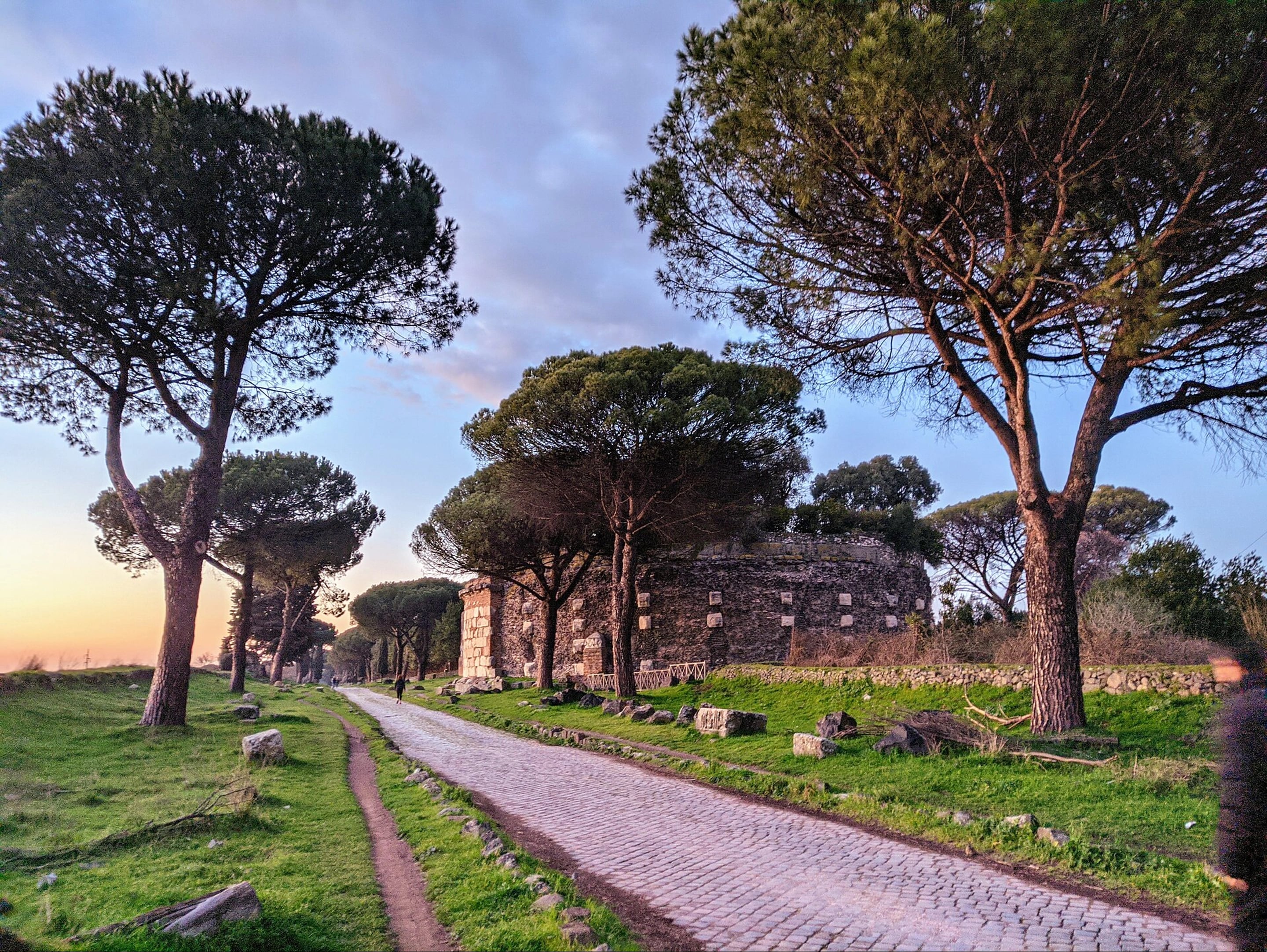
Appian Way, Roman Road Built by Appius Claudius Caecus
Laborers dug to firm ground, packed the trench with sand and gravel, and fitted the stones so tightly a knife blade could not pass between them, the surface crowned like a loaf of bread so rain would run off and the road would never drown. Every mile, a milestone, all of them counting back to the Golden Milestone that Augustus raised in the Forum. When people say all roads lead to Rome, they are repeating what was once an engineering fact.
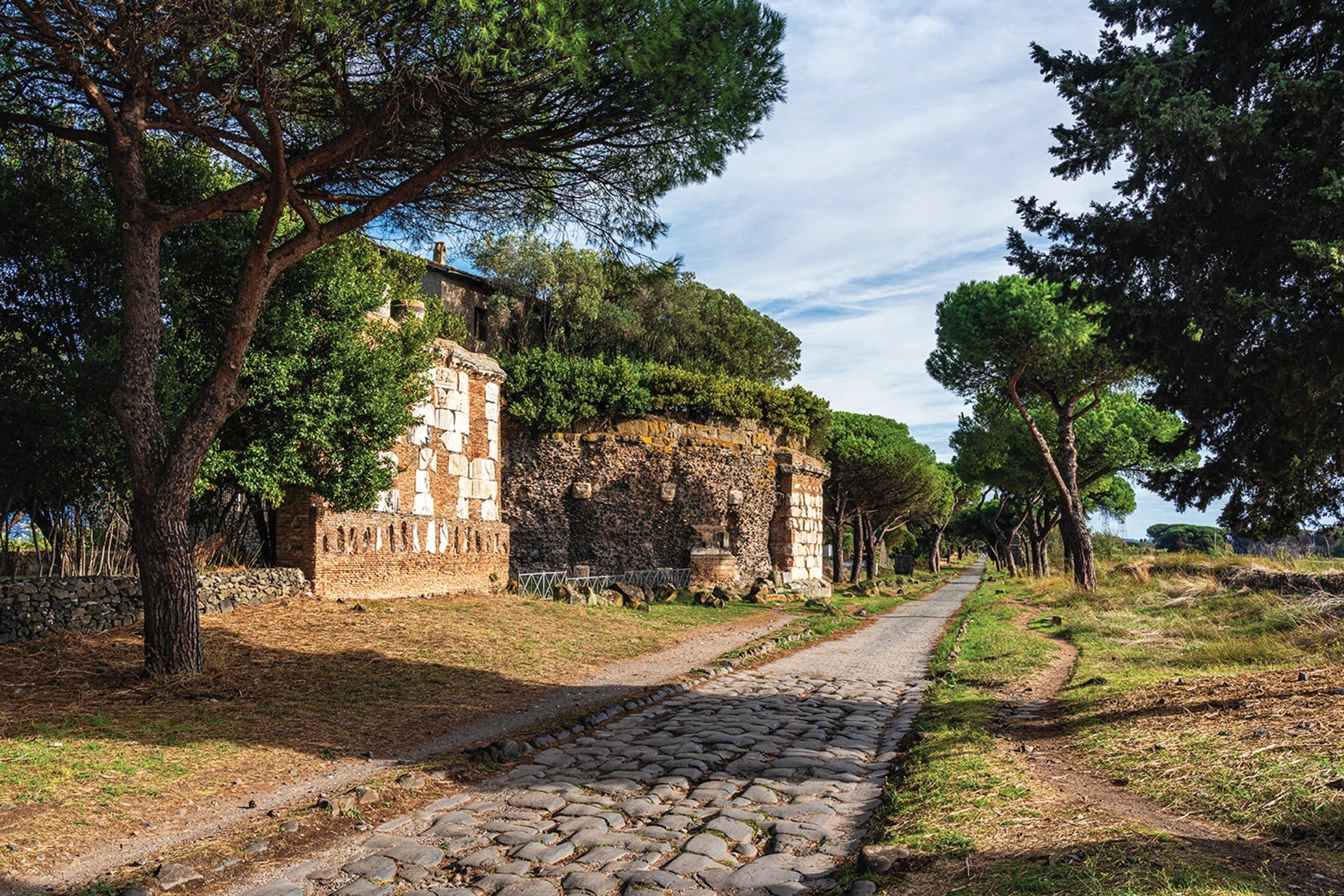
The Via Appia, constructed starting in 312 B.C.E., is the oldest and best-known road of the Roman Empire.
On a well-built cobbled surface, a legion could cover twenty miles a day, twice what it could manage through mud and rain, and the relay riders of the imperial post could carry a dispatch fifty miles between sunrise and dark. Cobblestone was infrastructure, and it was command: the surest way to move soldiers, orders, and trade across a continent. At its height the network ran to fifty thousand miles of paved highway, twenty-nine great roads radiating from Rome alone, from the moors of Britain to the deserts of Syria. Rome's ancient roads were the veins of an empire, and where the legions went, the stone followed.
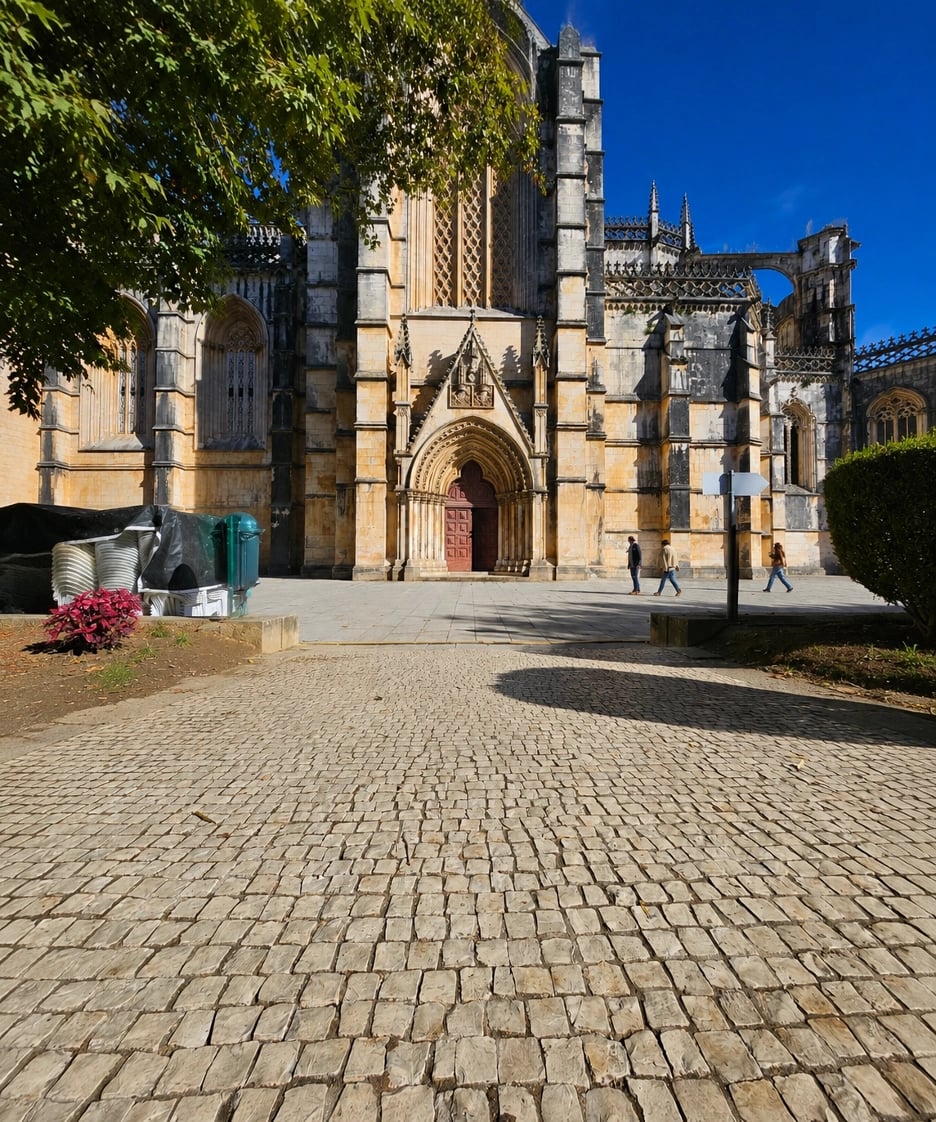
Cobbled forecourt of the Monastery of Batalha, Portugal. Photo: Neolithic Materials
When Rome Faded, the Roads Did Not
The same stones that carried Roman infantry went on to carry a continent. For five hundred years after the last emperor in the West gave up his title, the old roads were often the only good roads anyone had.
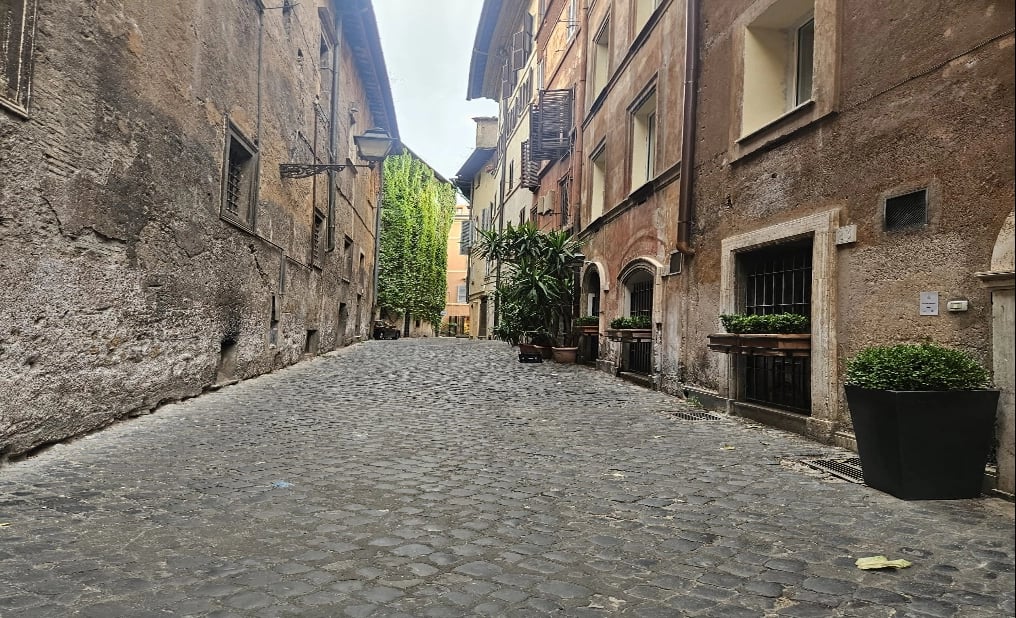
Black Basalt, Rome, Italy. Photo: Neolithic Materials
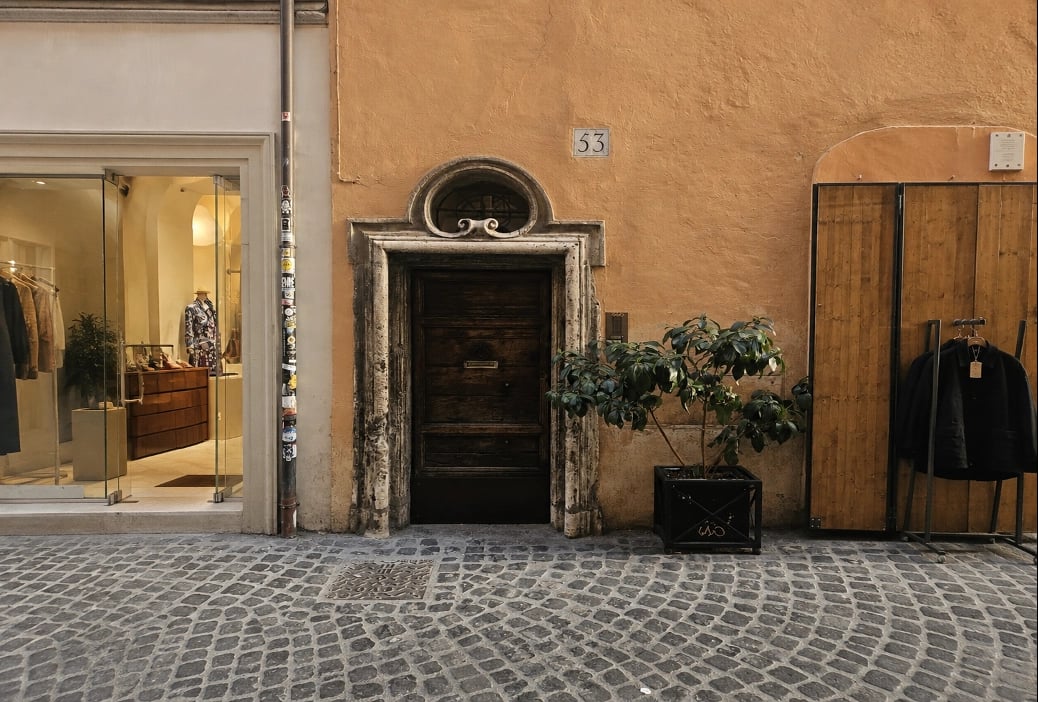
Black Basalt - Sampietrini beneath a 17th-century doorway, Rome, Italy. Photo: Neolithic Materials
Pilgrims walked them to Rome along the Via Francigena. Monks walked them between abbeys. Medieval builders treated old Roman work as a quarry someone else had already dug, and good squared stone was wealth lying in the ground, free to anyone willing to pry it loose.
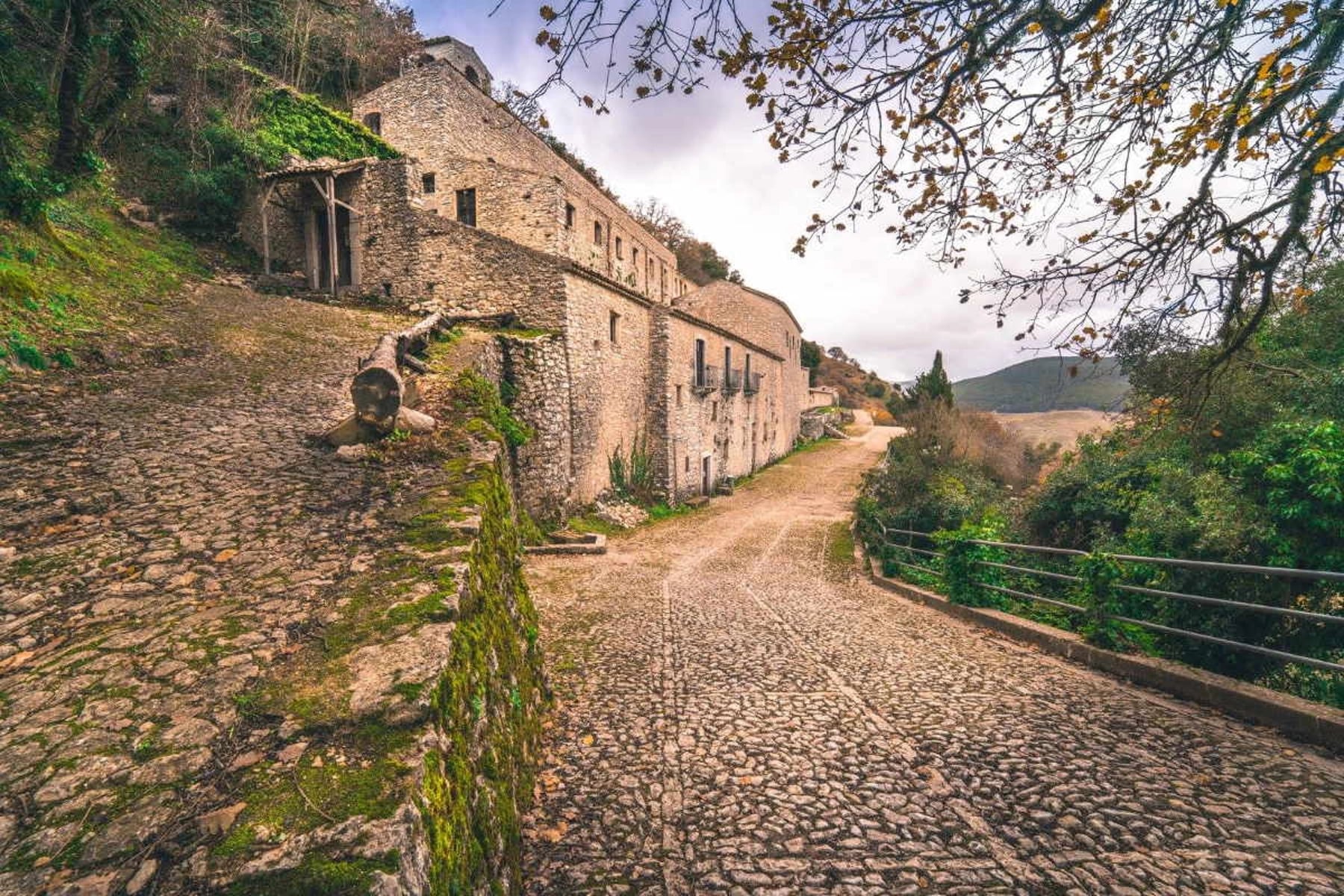
The Via Francigena is an ancient 2,000-kilometer (1,200-mile) pilgrimage route stretching from Canterbury, England, through France and Switzerland, to Rome, Italy
In Italy, the stones were laid across the great piazzas, where merchants traded silk and spice beneath the loggias of palazzos.
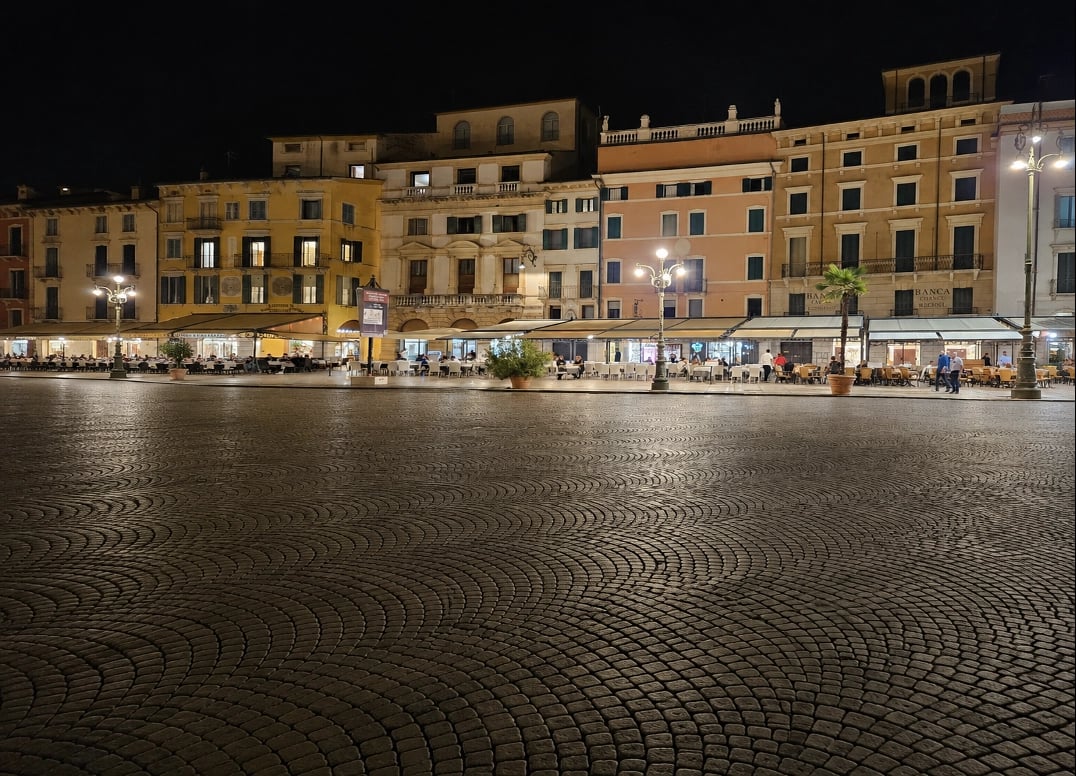
In France, they paved the courtyards of châteaux, where carriages rolled and grooms led horses across stone worn smooth by centuries of hooves. Paving became law there too: in 1184, King Philip Augustus, disgusted by the stench of mud rising to his palace windows, ordered the streets of Paris paved with stone, and city after city followed. A paved street meant carts could roll in any weather, which meant trade, which meant walls and cathedrals. The humble cobble, named for the old word cob, a rounded lump, became the quiet engine of the medieval town.
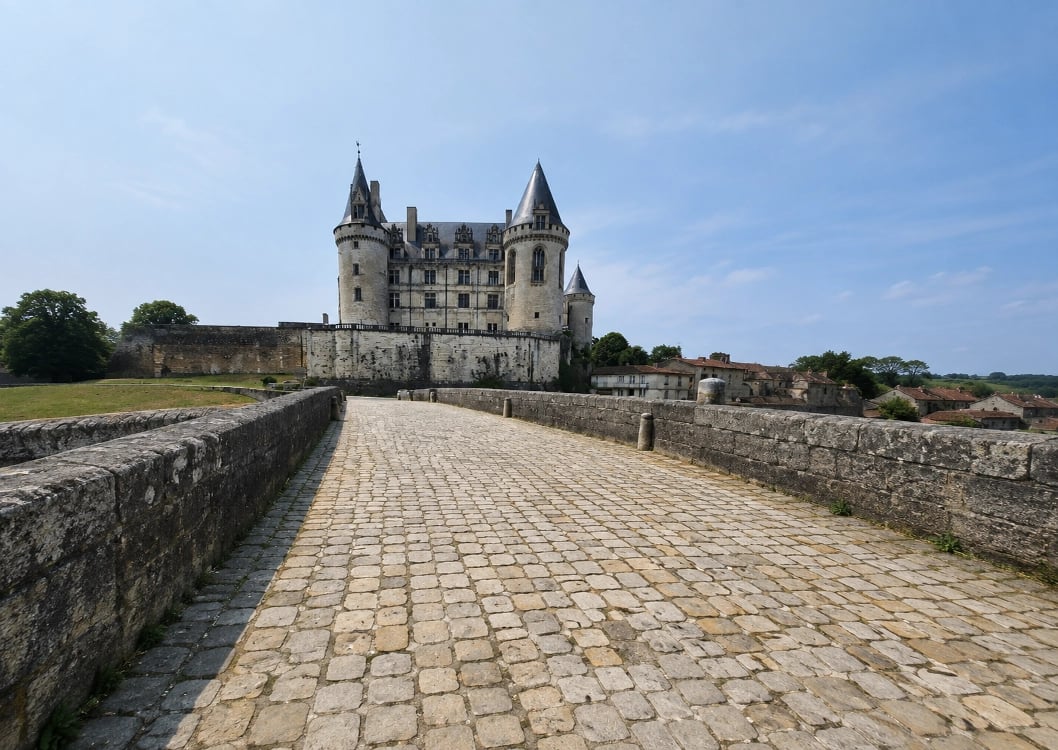
The cobbled approach to Château de La Rochefoucauld, Charente, France. Photo: Neolithic Materials
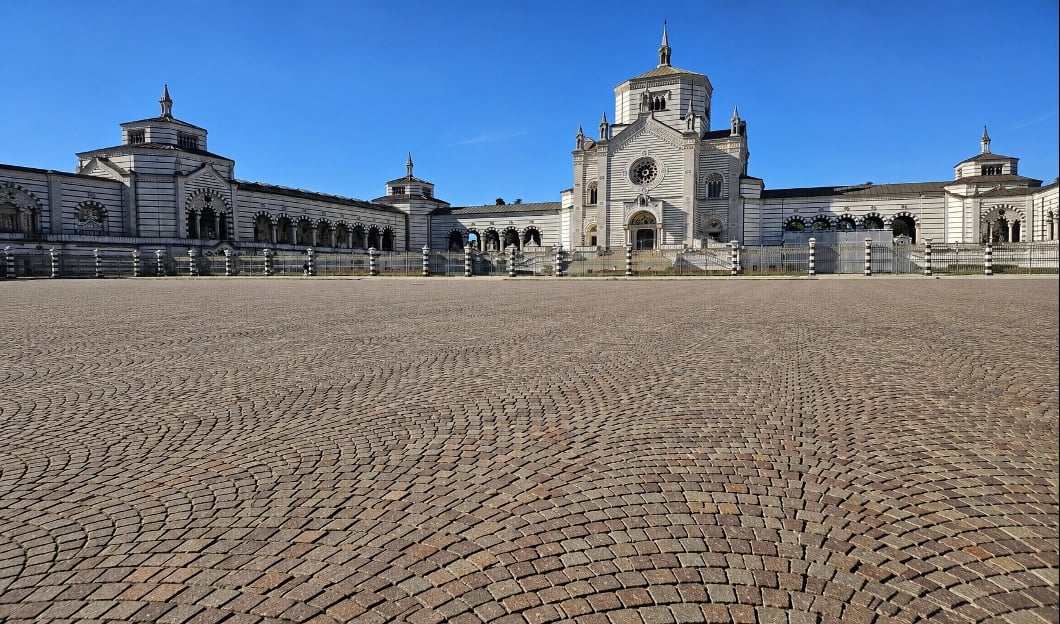
Cimitero Monumentale Milan, Italy. Photo: Neolithic Materials
From Flanders to the Baltic, market squares rang with the clatter of wooden wheels, wool, grain, and wine moving town to town along roads of ancient stone.
Belgium, above all, took the tradition to heart. Bruges in the thirteenth century handled the wool of England and the silks of Italy across quaysides of fitted stone. Antwerp in the sixteenth handled half the trade of Europe. The Belgians quarried their paving from the hard purple-gray porphyry of Quenast, a single quarry that grew into one of the largest in Europe, and shipped its sets down the rivers to pave the streets of a golden age. Its streets became a living surface of trade, every cobble pressed into the earth by weather, traffic, and ten thousand days of commerce. Napoleon, who moved artillery the way Rome had moved legions, paved his military roads with the same stone and for the same reason: stone does not care about weather, and armies do.
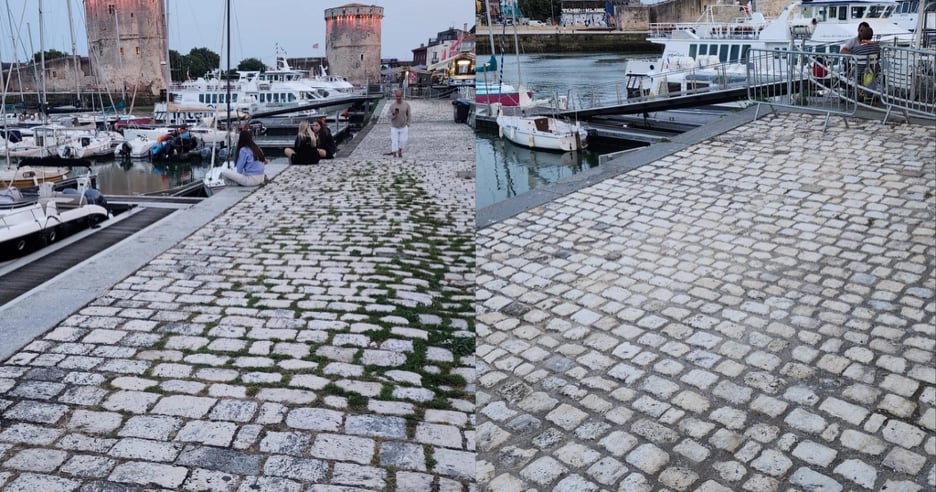
Harbor cobblestone at the old port of La Rochelle, France. Photo: Neolithic Materials

What Patina Truly Is
And that is what patina truly is. It is not a finish you can order or a glaze you can apply. It is history you can feel. The gentle hollow worn into a stone by ten thousand passing wheels.
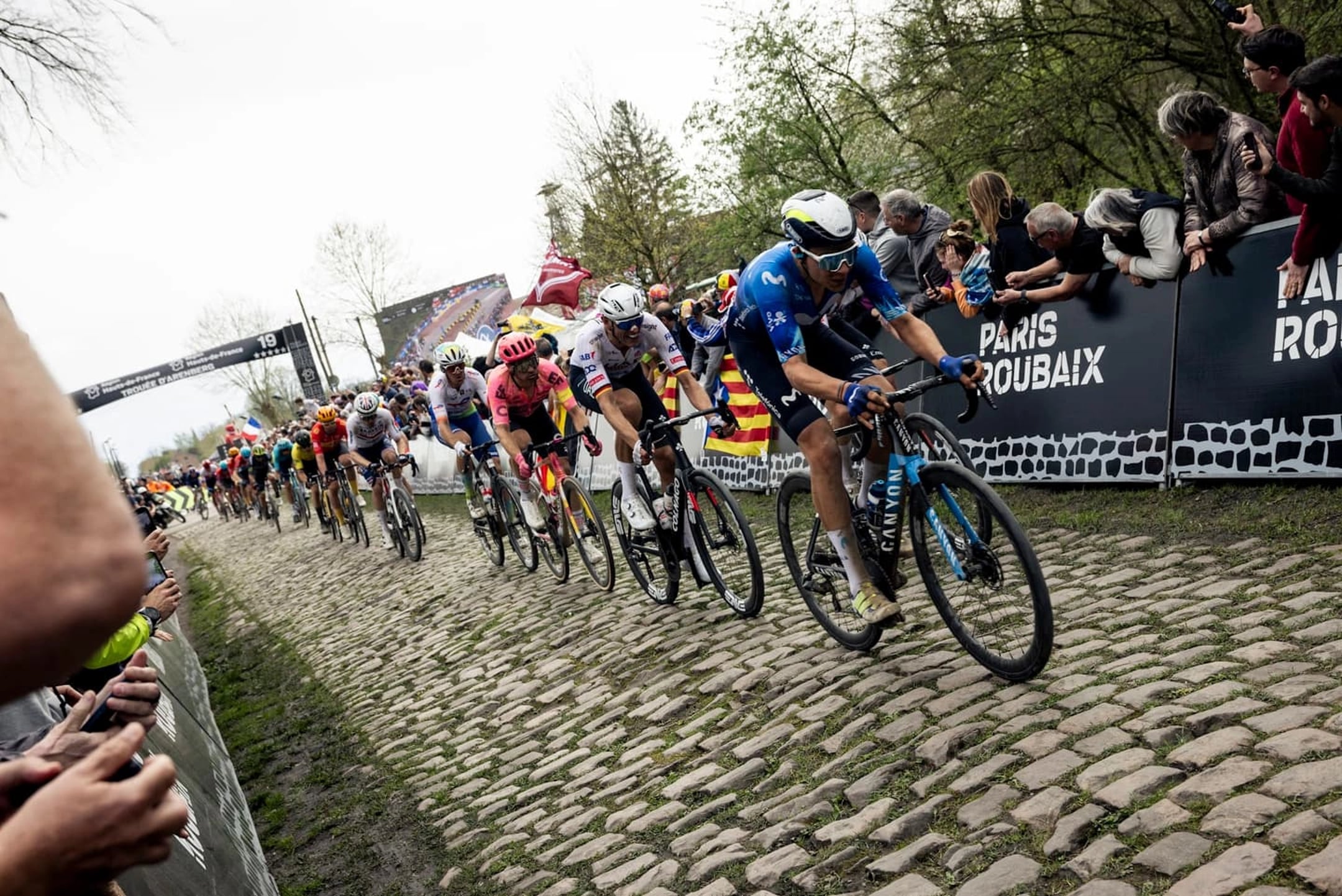
Paris-Roubaix 2021 KM39 by MumuCycling
The soft gleam where rain, boot heel, and horseshoe have polished a surface for hundreds of years. To this day, the cyclists of Paris-Roubaix and the Tour of Flanders cross the surviving stretches of pavé with a reverence they give nothing else on the route, and the cobbles rattle their bones the same way they rattled the Romans.
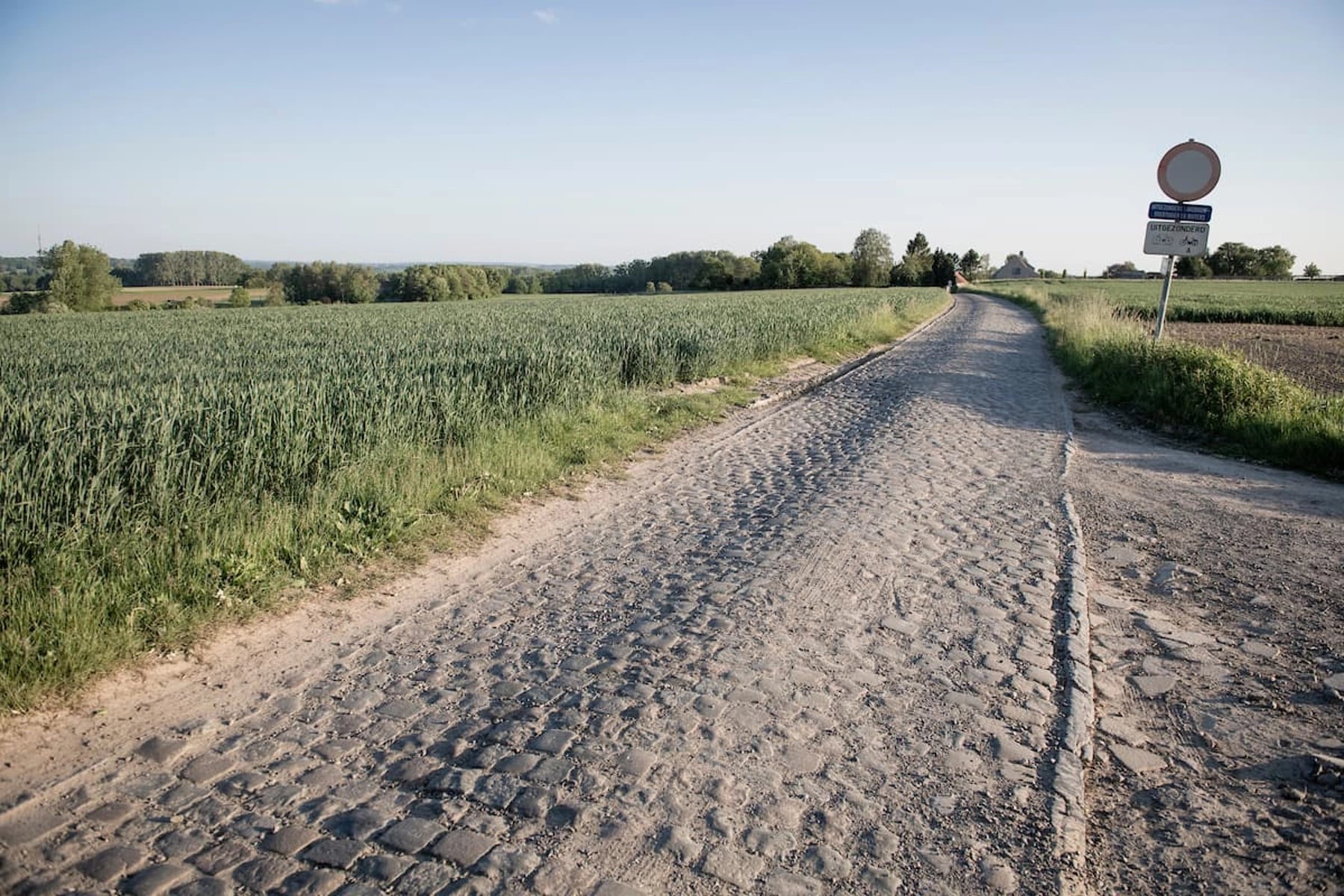
Flanders Cobblestone Road. Best known as “Tour of Flanders Berg” a cycling competitions in cobblestone around belgium
A reclaimed Belgian cobblestone is an antique that was never locked behind museum glass. It was lived on, every single day, by people long gone.
Recycling in Its Truest Form
That is why we reclaim them. Every reclaimed cobblestone, and every historical brick, is recycled in its truest form. No new quarry was opened to produce it. No mountain was cut, no diesel burned hauling raw blocks from a pit, no energy spent turning fresh stone into something that only pretends to be old.
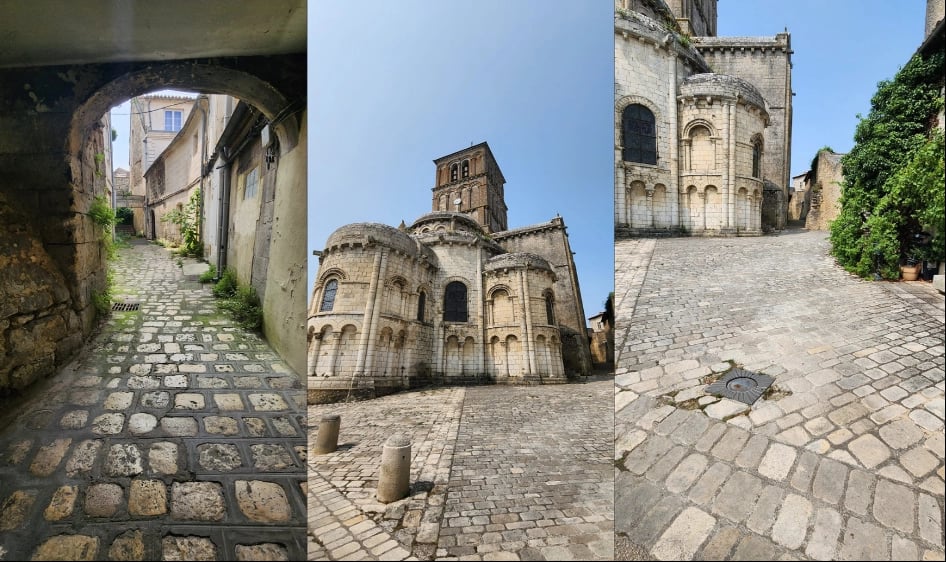
Cobbles worn to a shine beneath a stone archway, France. Photo: Neolithic Materials
The twentieth century wanted smoothness, and in the decades after the wars, town councils across Europe poured asphalt over the old streets or ripped up their cobbles wholesale in the name of progress. Concrete goes to the crusher. Asphalt goes back to the pot. Old stone gets rescued.
These stones already exist. They have already carried whole centuries on their backs. Reclaiming them gives a surface that has outlasted every generation that walked it a second life instead of consuming a new one. Quite literally the greenest material there is.
So a reclaimed cobblestone is more than a beautiful, historic piece. It is an antique you can walk on, a piece of history with a patina only time can earn, and a quiet act of stewardship all at once. Ancient surface. Antique character. Truly, genuinely recycled.
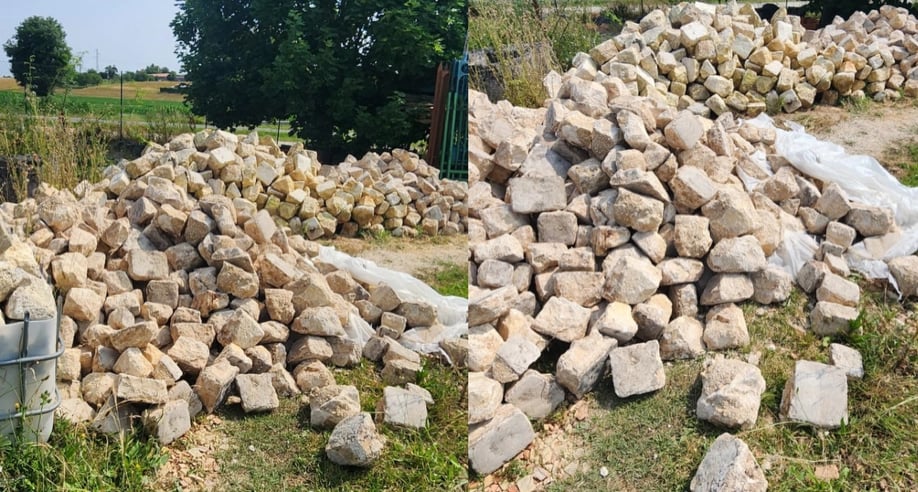
Reclaimed European cobblestone, salvaged and sorted by hand. Photo: Neolithic Materials
Lay them again and you are not simply paving a driveway or a courtyard. You are walking on the same ground that carried legions, merchants, and ten generations of ordinary mornings, and leaving the earth a little lighter for it.
Bring the Old Roads Home
Neolithic Materials carries reclaimed European cobblestone in two selections, each with a different voice.
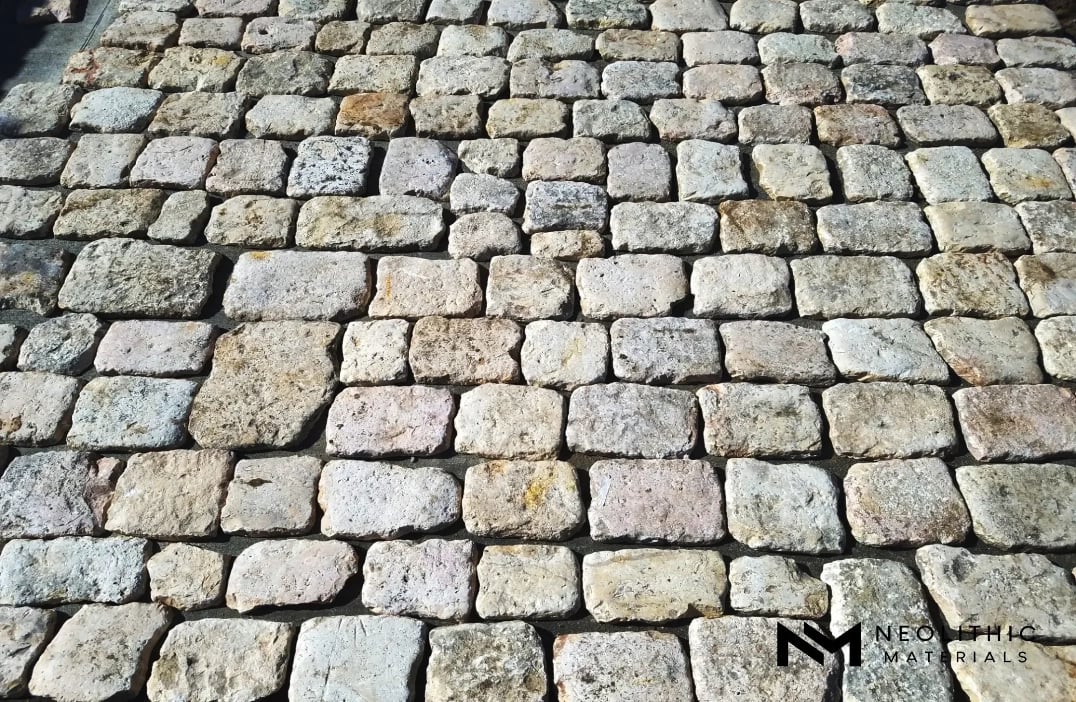
Antique Roman Pavers recall the classic stone streets of Rome. Basalt gray, limestone beige, and warm neutrals, with tops worn smooth by time and edges softly rounded. Laid across a driveway, motor court, or courtyard, they give the entry a heavy, permanent feel from the first day.
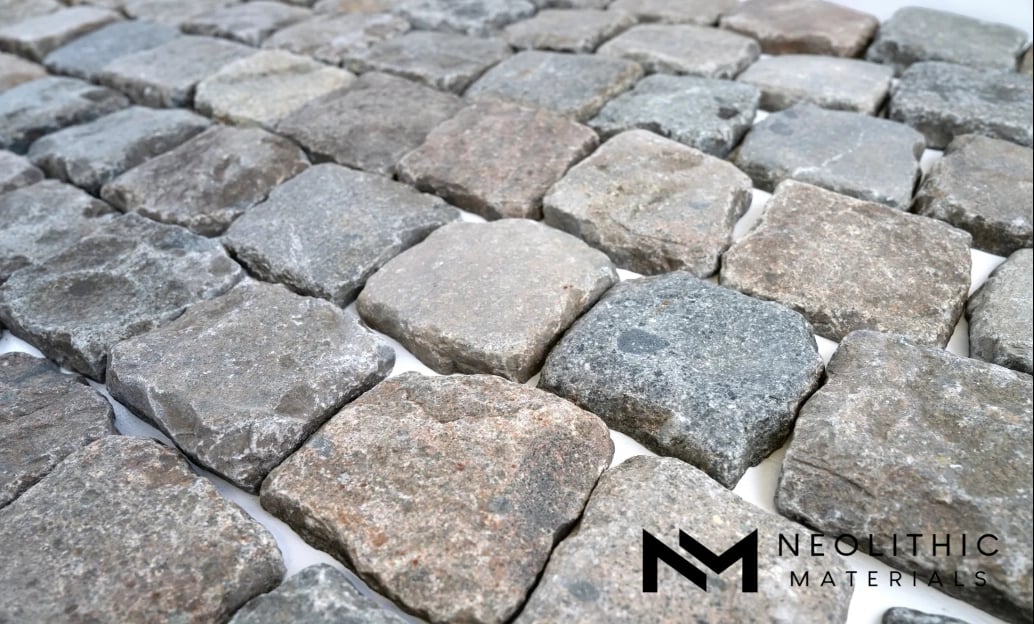
Belgian Reclaimed Porphyry Cobblestone carries the moodier palette of the north. Deep charcoal, slate blue, and smoky gray, matte in the sun and shimmering after rain, cut from the same hard Belgian porphyry that paved the streets of a golden age.
Photos can only do so much for stones like this. Visit our showroom in Marina Del Rey or The Gallery in Gardena, feel the wear under your hand, and see which road belongs at your address. Schedule an appointment or request a spec sheet, and our team will walk you through both, cobble by cobble.